
Australia is an old country. Not old in the way Europe is old, with buildings and cities, but old in its soil, its landscapes, and the way its systems function. That matters, because for a long time we’ve farmed this country as if it were somewhere else.
When European settlers arrived, they didn’t just bring animals and crops. They brought a way of thinking. Farming systems shaped by predictable seasons, softer landscapes, and soils that respond well to being worked, turned, and pushed. That thinking made sense in Europe. It doesn’t translate naturally here. But for generations, we’ve tried to make it fit anyway.
We imposed four seasons onto a land that doesn’t behave in four neat quarters. We cleared, ploughed, fertilised, and pushed for output, trying to bend the land to what we wanted from it, instead of asking what it was capable of giving. Over time, that approach has taken its toll. Soil has degraded “The health of our soils continues to decline. Australia has had the third highest cumulative loss of soil organic carbon in the world….” (SoE Report 2021). Water retention has dropped. Landscapes have become more fragile. These aren’t isolated issues. They’re the result of a system that was never designed for this place.
Long before any of that, Indigenous Australians understood something different. They didn’t see the land as something to control. They saw it as something to read. Seasons weren’t fixed, they were fluid. In many parts of Australia, there are not four seasons but six, sometimes more, each marked by subtle changes in plants, animals, and weather patterns. Those signals guided movement, harvesting, and burning. It wasn’t about forcing consistency. It was about responding to change.
That idea, working with the land rather than against it, sits at the heart of regenerative farming. It’s a shift away from control and toward observation. Instead of asking how much we can take, it asks how we can improve the system so it continues to give.
A big part of that conversation is livestock. There’s a growing narrative that animals don’t belong here, and in some ways that’s true. Cloven-hoofed animals aren’t native to Australia, and if they’re left in one place too long, they can cause damage. They can strip ground cover, compact soil, and accelerate degradation. But that outcome isn’t inevitable. It comes down to how they’re managed.
When animals are moved properly, when grazing is short and rest periods are long, they can actually help rebuild landscapes. They stimulate plant growth. They cycle nutrients. They improve soil structure and water retention. The difference is not the animal, it’s the system around it. That’s a key idea. We tend to blame the visible part of the problem, but often the issue sits in how we manage it.
At the centre of all of this is soil. It’s easy to overlook because it sits beneath everything, but it dictates everything. Healthy soil holds water, supports plant life, and underpins entire ecosystems. In Australia, that matters even more because our soils are ancient and fragile. They don’t bounce back the way younger soils do. Once they’re depleted, recovery is slow. That means the way we manage them isn’t just important, it’s critical.
What regenerative farming starts to do is reconnect all of these pieces. Land, animals, soil, climate. It treats them as a system rather than separate parts. And when you start to see it that way, it changes how you think about food.
Because this doesn’t stop at the farm.
The way we farm shapes the way we eat. And the way we eat shapes the way we value food.
When food is produced in a system that prioritises volume and efficiency above all else, it becomes easy to disconnect from it. It becomes just another product. Something you can buy, use, and throw away without thinking too much about where it came from or what it took to produce.
But when you understand the system behind it, that changes.
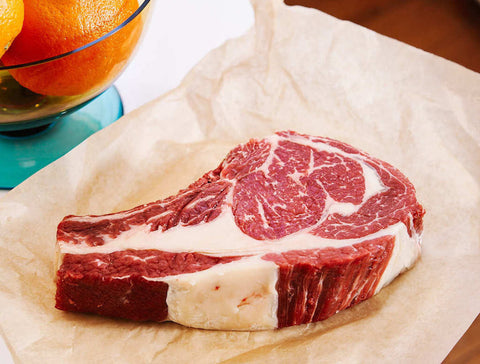
You start to see that a single animal represents years of land management, seasons of growth, decisions around grazing, weather, and care. You start to understand that every cut of meat is part of a whole animal, not just an isolated product. And that naturally shifts how you consume.
You waste less.
You value different cuts, not just the premium ones.
You become more conscious of how much you actually need.
That connection, between land, animal, and plate, is where regenerative thinking becomes real for people. It’s not just about improving soil or managing grazing. It’s about reshaping the relationship we have with food.
Because when you consume without thought, you waste without thought.
And when you start to understand the system behind what you’re eating, it becomes much harder to do that.
Regenerative farming isn’t about going backwards. It’s about adjusting how we think. It’s recognising that this is an ancient, complex landscape that doesn’t respond well to being forced. It responds to being understood.
In a country like Australia, that shift isn’t optional long term.
It’s necessary.
And if we get it right, it doesn’t just improve the land.
It changes the way we eat, the way we value food, and the way we see our role in the system that feeds us.
The thinking in this piece has been shaped by a number of influences over time. In particular, Charles Massey’s Call of the Reed Warbler and Alan Savory’s work through the Savory Institute have played a significant role, alongside my own experience working within organic and regenerative farming systems.
References:
Australia State of the Environment (SoE) Report 2021 https://soe.dcceew.gov.au/land/key-findings